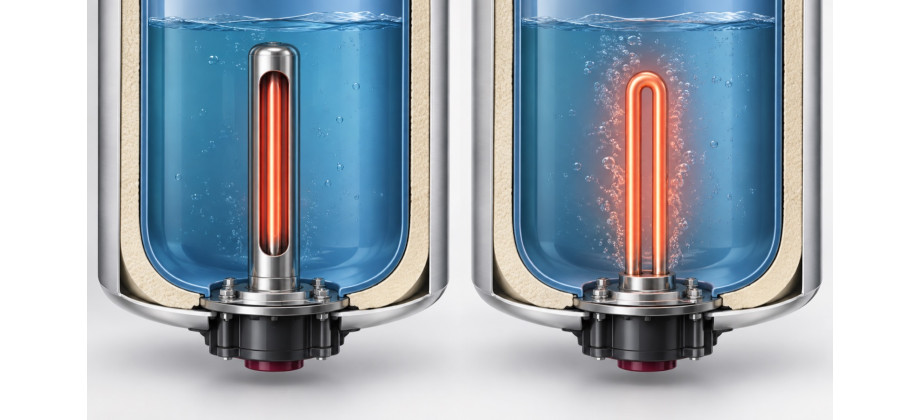
The heating element is important, but it should not be the only criterion when choosing a storage water heater. Water quality, tank volume, power, insulation, installation space and access to qualified service often matter just as much.
The electric element sits inside a sealed protective sleeve and does not contact the water directly. Heat passes through the sleeve into the tank water.
The immersion element is located directly in the water. This is a straightforward and widely used construction with direct heat transfer.
| Criterion | Dry element | Wet element |
|---|---|---|
| Contact with water | No direct contact; the element is inside a protective sleeve. | Direct contact with the tank water. |
| Scale exposure | The element itself is isolated; deposits can still form on the sleeve and inside the tank. | Deposits form directly on the element and can impair heat transfer over time. |
| Servicing | Element replacement may be possible without draining on models designed for it. | Draining and flange access are commonly required. |
| Purchase cost | Usually higher because of the more complex construction. | Often lower due to the simpler construction. |
| Energy use | Not automatically lower; compare the complete model and energy label. | Not automatically higher; volume, insulation, settings and use are decisive. |
| Best fit | Harder water, main household use and easier element servicing. | Favourable water conditions, compact models and budget-focused selection. |
Hard water contains calcium and magnesium salts. During heating, deposits form on hot surfaces. A thick layer worsens heat transfer, can increase local element temperature and may cause more frequent thermostat cycling or heating noise.
A dry element reduces direct scale impact on the electrical element, but it does not make the entire water heater maintenance-free. Deposits can still collect on the sleeve, tank surfaces and bottom. Water treatment and timely servicing remain important for either design.
Element type alone does not determine electricity consumption. For two correctly operating water heaters of similar useful volume, heat demand is governed mainly by the amount of water heated, the temperature rise and standby heat losses.
Compare the exact model’s energy label, useful volume, rated power, insulation, control modes and daily hot-water profile. A well-sized water heater normally performs better in real use than an oversized model chosen only because it has a particular element type.
Regularly inspect the magnesium anode and remove deposits at the interval specified in the model manual and local warranty conditions. The correct interval depends strongly on water quality, temperature and usage.
Do not treat unusual noise, longer heating time or frequent protection trips as normal. Disconnect the appliance and contact an authorised service specialist. Electrical, pressurised and flange work must be performed by qualified personnel.
The current Hi-Therm range includes both constructions, so the choice can be made around the actual installation and water conditions.
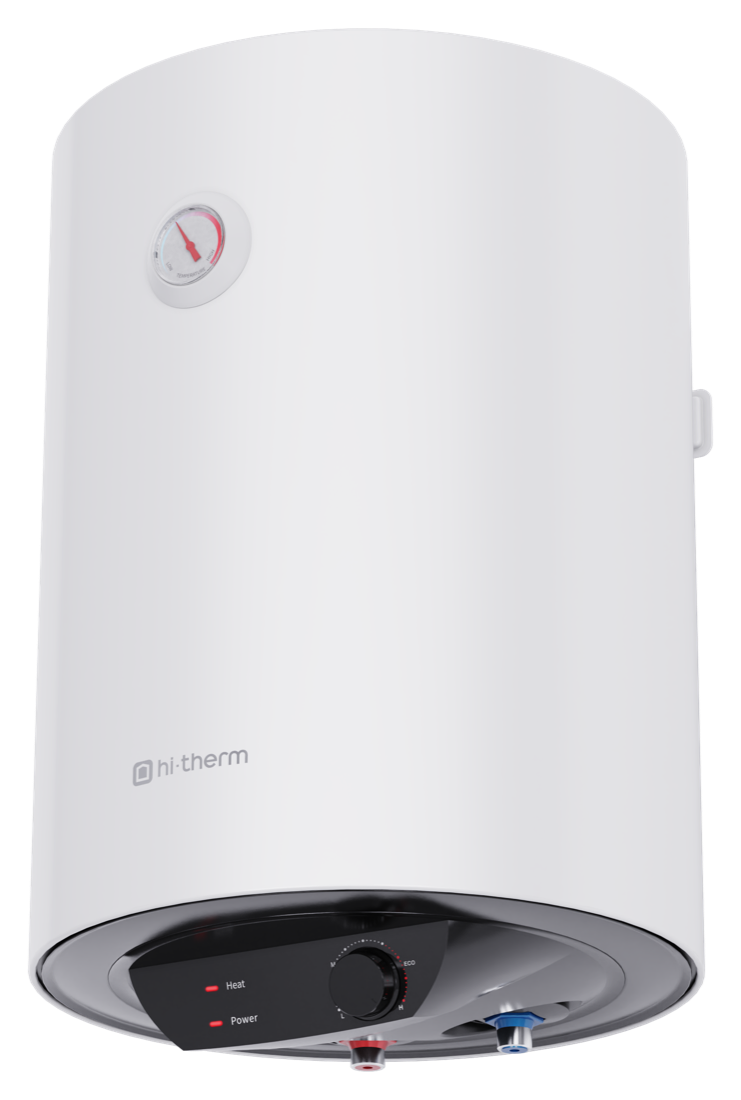
LUMIA DRY uses an isolated dry element. LUMIA DIGIT DRY and LUMIA TECH DRY add electronic functions in selected models. The available capacity, power and functions must be checked in the exact model datasheet.
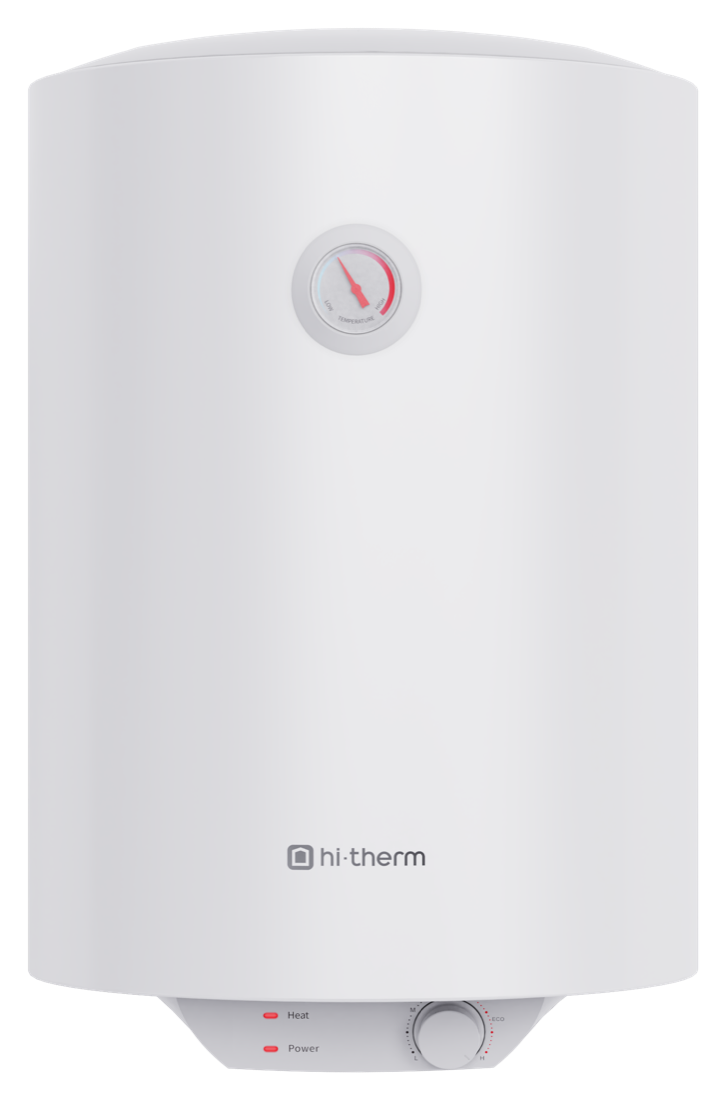
LUMIA models use direct-contact elements. The wet element is made from SUS316L stainless steel with an enamel coating.
No. It is isolated from direct water contact, but deposits may still form on the protective sleeve and inside the tank. Periodic servicing remains necessary.
No. Energy consumption depends on useful volume, temperature setting, insulation, control and usage. Compare the energy information for the exact model.
Only when the specific construction is designed for it. Hi-Therm documentation states this possibility for the relevant LUMIA DRY design; work should still be performed by qualified service personnel.
A dry element is usually easier to protect and service in hard-water conditions, but water treatment and regular anode and tank maintenance are still important.
Choose a dry element when reducing direct scale impact and simplifying element service are priorities. Choose a wet element when a simple, compact and cost-conscious solution matches the water conditions. In both cases, the best water heater is the correctly sized model that is properly installed and serviced.


