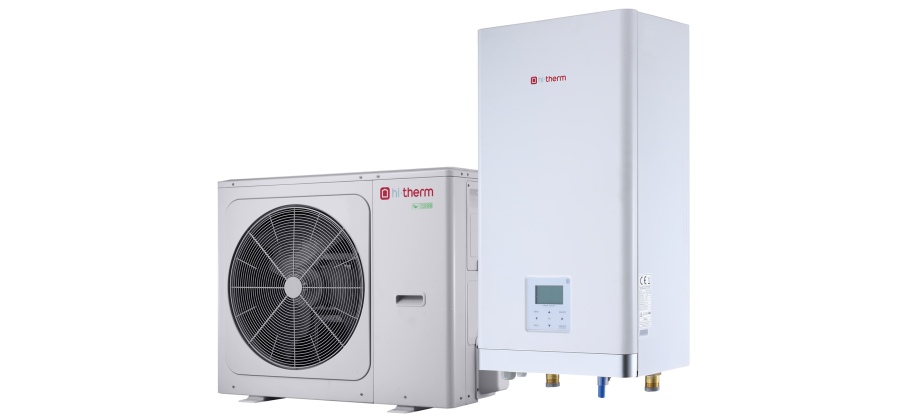
An air-to-water heat pump is a modern heating system that extracts heat from the outdoor air and transfers it into your home's water-based heating system, such as underfloor heating, radiators, or an indirect water heater.
In simple terms: The system does not "create" heat like a standard electric boiler; instead, it simply transfers it from the outside into your house. This is why it consumes significantly less electricity compared to traditional heating systems.
The operating principle is very similar to an air conditioner or a refrigerator, just in reverse:
The outdoor unit extracts heat from the outside air (even at sub-zero temperatures).
The compressor compresses the refrigerant, causing its temperature to rise sharply.
The indoor unit (hydro-module) transfers this heat into the water used for heating and domestic hot water.
Modern inverter models are capable of operating efficiently and keeping your home warm even during extreme winter drops down to -25°C.
The main reason behind the popularity of heat pumps is their low power consumption. To measure efficiency, a Coefficient of Performance (COP) is used, which represents the ratio of heat produced to electricity consumed.
For example, with a COP = 4, the system delivers 4 kW of heat while consuming only 1 kW of electricity. As a result:
Electricity bills drop 3 to 4 times compared to an electric boiler.
You gain real independence from constantly rising utility tariffs.
A single device completely covers all the climate needs of a house all year round:
In winter: Efficiently heats the premises.
In summer: Works for cooling instead of traditional air conditioners (via fan coils or radiant chilled ceiling/wall systems).
Year-round: Provides the family with domestic hot water.
For the installation and operation of the system, you do not need:
Approvals, permits, or expensive gas line connections.
Chimney installation and complex ventilation.
Firewood, pellets, or coal storage.
A large, dedicated boiler room.
A heat pump has no open flame, explosive fuel, or risk of carbon monoxide leaks. Most modern systems run on the progressive and environmentally safe R32 refrigerant, ensuring the highest level of energy efficiency.
Yes, it works completely reliably. This is the most common question among buyers.
During severe frosts (below -20°C), the system's efficiency (COP) gradually decreases, but it continues to heat. For backup and peace of mind, most models come with a built-in electric heating element (backup heater) that automatically turns on during the coldest days of the year.
Important for maximum efficiency: A heat pump unlocks its full potential when paired with low-temperature heating systems — underfloor heating and modern radiators with a large surface area — as well as proper home insulation.
Air-to-water heat pumps are versatile and perfect for:
Private houses, cottages, and townhouses (both new builds and retrofits of old systems).
Offices and modern commercial premises.
Small manufacturing or warehouse facilities.
The initial investment for purchasing and installing a heat pump is higher than that of a conventional gas or electric boiler. However, it is essential to look at the long-term economics:
You are buying one system instead of two (heating + air conditioning).
There are zero costs for gas piping or chimney construction.
Due to minimal electricity consumption, the equipment fully pays for itself within a few seasons, after which it operates in pure profit.
When selecting equipment, be sure to analyze the following parameters:
COP and SCOP coefficients (the higher they are, the more economical your heating will be).
Guaranteed operating temperature range in winter.
Compressor type (choose only modern inverter models).
Noise level of the outdoor unit (crucial for your comfort and your neighbors).
Wi-Fi connectivity for convenient system control via smartphone.
Quality of service support and official warranty.
An air-to-water heat pump is a rational choice for those looking a step ahead. It offers the opportunity to completely abandon gas and solid fuels, gain full climate control of your home in a single device, and cut utility costs to a minimum. Today, it stands as the most promising direction for creating an energy-efficient and comfortable home.


